

CASINO GUIDE
New Zealand Online Casino Rules and Market Guide
An overview of New Zealand’s changing online casino framework and the limits of what can be inferred about games, payments and bonuses.
 Available in US
The Rules Behind New Zealand’s Online Casino Market
New Zealand’s online casino rules are moving from a system without domestic licensing to one with a local licensing framework. The Online Casino Gambling Act 2026 is the turning point. It came into force on 1 May 2026 and established New Zealand’s first domestic regime for licensing online casino gambling.
That change matters because the previous position was easy to misread. Under the Gambling Act 2003, an online casino could not be based in New Zealand. Online casino services were still accessible from overseas, but before the new Act, those offshore providers were not licensed or supervised by a New Zealand regulator. If you had a dispute with one, there was no domestic government recourse. Access and local oversight were not the same thing.
The new system does not make every provider operating during the transition licensed. Instead, it sets out who may continue temporarily and what providers must do to seek permission to operate under the new regime. That distinction is worth keeping in mind when you read claims about regulation: an application is not a licence.
If you’re exploring online casinos in New Zealand, this index gives you a concise starting point for reviewing the listed operators. Check the details that matter to you before choosing.
-
7Bit Casino
- License
- Tobique Gaming Commission, licence no. 0000091
7Bit Casino lists a licence from the Tobique Gaming Commission, number 0000091.
-
N1 Casino
- License
- Malta Gaming Authority, licence no. MGA/B2C/394/2017
N1 Casino lists a Malta Gaming Authority licence, number MGA/B2C/394/2017.
-
Ricky Casino
- License
- Tobique Gaming Commission, licence no. 0000002
Ricky Casino lists a licence from the Tobique Gaming Commission, number 0000002.
-
Lamabet
- Payout speed
- 1-3 business days
Lamabet states a payout speed of 1–3 business days.
-
BitStarz
- License
- Curaçao Gaming Authority, licence no. OGL/2024/165/0185
BitStarz lists a Curaçao Gaming Authority licence, number OGL/2024/165/0185.
-
Play Grand
- License
- Malta Gaming Authority, licence no. MGA/B2C/370/2017
Play Grand lists a Malta Gaming Authority licence, number MGA/B2C/370/2017.
-
Neospin
- License
- Tobique Gaming Commission, licence no. 0000064
Neospin lists a licence from the Tobique Gaming Commission, number 0000064.
-
Wintino
- Payout speed
- 1-3 business days
Wintino states a payout speed of 1–3 business days.
-
Zotabet
- License
- 07017519840
- Payout speed
- 1-3 business days
Zotabet lists the identifier 07017519840 and states a payout speed of 1–3 business days.
Who does what
The Department of Internal Affairs (DIA) is New Zealand’s primary gambling regulator and oversees regulation of the online casino licensing framework. The Gambling Commission has a different role within that system: it considers casino licensing applications and makes decisions on them. It is also responsible for issuing online casino licences and approving changes to licence conditions.
In plain terms, the DIA oversees the framework, while the Commission handles the licensing decisions. The division matters because “regulated by the DIA” and “licensed by the Commission” are not interchangeable descriptions. One refers to oversight of the system; the other concerns the formal permission a provider needs under the new regime.
The Gambling Commission also determines applications, rather than simply receiving paperwork and passing it along. A provider that applies is asking for a decision, not announcing that it has already secured permission. If an application is declined, the provider cannot carry on in New Zealand as though nothing has changed; it must stop all online casino gambling operations in the country and leave the market.
That is a firm outcome, not a request to tidy up the application later. No licence, no continuation.
The transition is not a permanent exemption
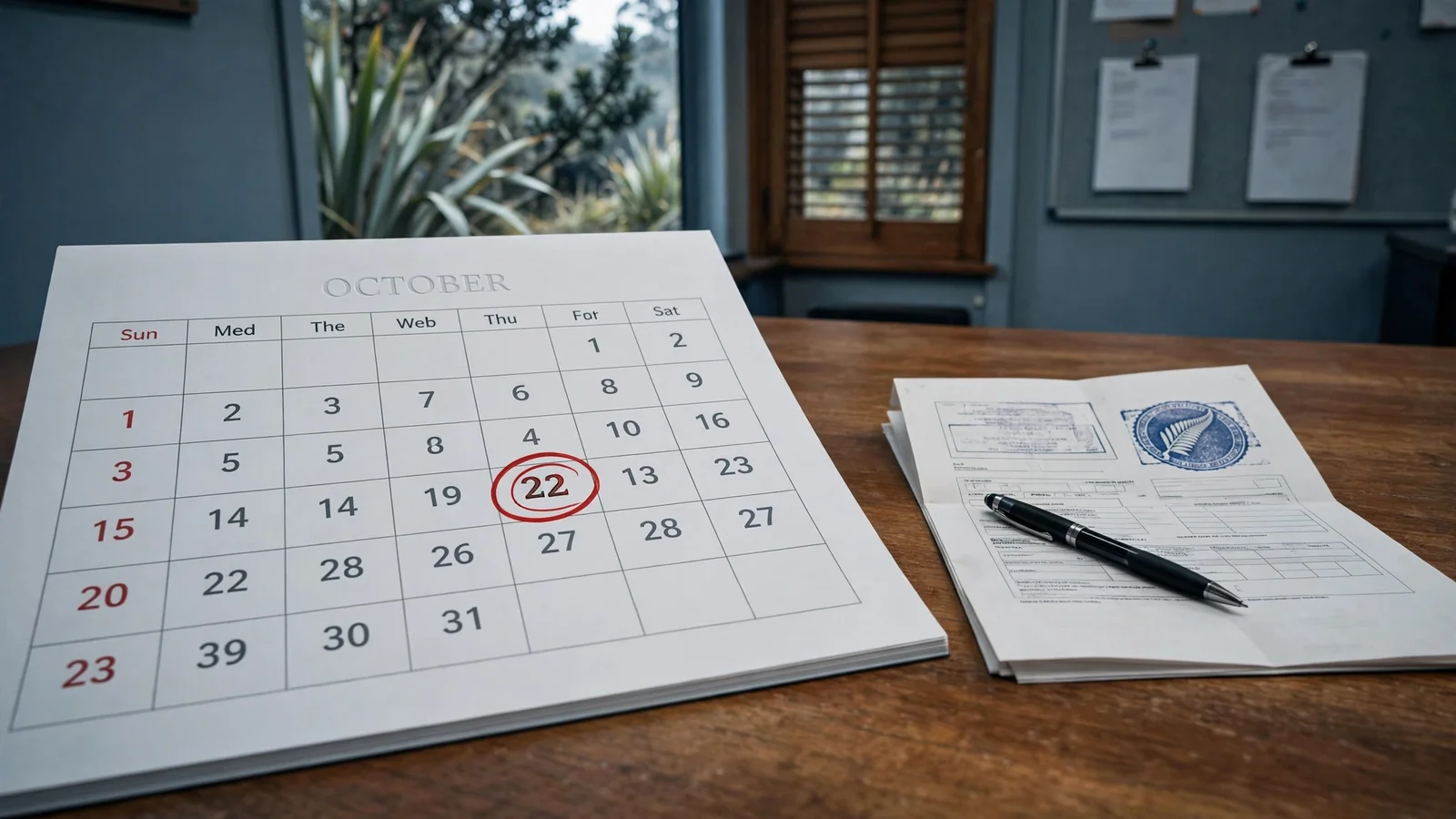
The Act provides a transition from 1 May 2026 until 1 December 2026. Online casinos that were already providing services to people in New Zealand before 1 May 2026 may continue operating during that window, subject to the Act’s transitional provisions. The permission is tied to the transition; it should not be mistaken for a lasting licence or a general allowance for new providers to enter.
A provider that was not already operating in New Zealand before the transition began does not qualify for that temporary continuation simply because it is based overseas or serves customers elsewhere. The transition is for existing providers, and its boundaries matter.
The key deadline is 1 December 2026. A provider that has not applied for a licence by then must stop conducting online casino gambling in New Zealand. Applying does not, by itself, guarantee approval, but it is the required step for a provider seeking to continue into the licensing process. If the Commission declines an application, the provider must cease its New Zealand operations and exit the market.
So there are two different routes to an exit: failing to apply by the deadline, and applying but being refused. The Act does not treat either as permission to carry on indefinitely. If you are trying to understand a provider’s status, the useful distinction is whether it is temporarily allowed to continue, has applied, or has actually received a licence. Those are separate stages.
The legal shift is also staged beyond the application deadline. The full licensed regime is not expected to be fully operational until 2027, and unlicensed operation is expected to become an offence around mid-2027. That later enforcement milestone does not extend the transition deadline for providers that have not applied. They must stop by 1 December 2026.
Providers without a licence may face enforcement action and fines of up to NZ$5 million. That consequence is directed at operators, not customers. The legal framework described here does not make a player criminally liable or subject to a fine for using an offshore casino without a New Zealand licence. Offshore websites may remain practically accessible, but access should not be confused with domestic approval or protection.
What the change means for you
The practical point is that New Zealand is introducing local licensing where there was no domestic licensing and supervision of offshore online casino services before. During the transition, some existing providers may continue under transitional provisions, but that does not mean every accessible website has a New Zealand licence. Nor does an application mean that the Commission has granted one.
I would read any claim about “New Zealand regulation” carefully. Ask what it refers to: oversight of the framework by the DIA, an application being considered by the Commission, or a licence actually issued by the Commission. Those descriptions carry different weight. A provider’s overseas status or its availability to New Zealand customers does not answer that question.
For consumers, the change brings a domestic licensing process and named New Zealand authorities responsible for it. It does not rewrite the earlier period, when offshore online casino services operated without local supervision and customers had no domestic government recourse. It also does not erase the transition conditions: existing providers may continue only within the rules and dates set by the Act, while providers that fail to apply or are declined must leave.
There is one more distinction worth holding onto: the market’s transition rules govern providers, while the licensing decision belongs to the Commission. The DIA oversees the framework, but it is not the body that issues the online casino licences described here. Keeping those roles straight makes the change easier to follow—and makes vague claims about being “regulated” less persuasive.
The system is still moving into place. Until the full regime is operational, the safest reading of the rules is a narrow one: temporary continuation applies to eligible existing providers, an application is not approval, and the deadline and refusal conditions both require an exit. The framework gives New Zealand a local route for licensing and oversight. It does not turn every offshore casino available to residents into a locally licensed provider.
Slots: What This Section Can—and Can’t—Tell You
Pokies are one recognisable corner of online casino play, but the label does not tell you what a particular title is like. It identifies a category, not a promise about its pace, rules or feel. If you have played one pokie, you have experience with that title; you do not have a reliable guide to every other one. That distinction is easy to lose when a page groups many games under a single heading.

I treat the category as a starting point, not a verdict. A name, image or short description can give you an impression, but the details that matter belong to the individual game. Before you begin, look at the title’s own information and make sure you understand the rules shown there. If something is unclear, stopping to check is more useful than guessing. There is no prize for learning a game by surprise.
A category is not a set of identical games
The word “slots” can make a large catalogue sound more uniform than it is. In practice, the useful question is not only whether a game is a pokie, but whether you understand the particular one in front of you. Its instructions and displayed terms are what you can use to assess it; broad labels cannot fill in details that are specific to a title.
That matters when you are comparing options. A familiar-looking screen does not establish that two games work in the same way. Nor does a short promotional description necessarily explain the rules in full. I would read the in-game information before deciding whether the title suits me, rather than assuming that experience elsewhere carries over.
This is a simple habit, but it keeps the category in its proper place. “Pokies” tells you where to look. It does not tell you what you will find.

Read the individual rules, not the sales pitch
When a game provides information about how it works, take a moment to read it. Look for the rules that explain what the available choices mean and how the title describes its outcomes. If the information uses unfamiliar terms, find their explanations in the game itself before continuing. A page of colourful artwork may catch your eye; it is not a substitute for rules.
I also separate description from evidence. A title may be presented in language designed to sound exciting, but that does not tell you how it will perform for you. A theme or a striking presentation is a matter of style. It does not establish that a game is more predictable, more rewarding or more suitable than another.
Where a game displays technical or statistical information, read what the figures refer to and whether the explanation is clear. Do not treat a number as a personal forecast. A general measure, if shown, cannot tell you what will happen in a particular session. If you cannot tell what a stated measure means, it is safer not to build a decision around it.
Set your own limits before you start
The most practical question is often not which title looks best, but whether you have decided how much time and money you are willing to spend before opening it. Make that decision away from the excitement of play, then stick to it. Do not treat a previous result as a reason to keep going, and do not assume that more time will make a game easier to understand or control.
Do
- Read the individual rules of every game
- Set your time and money limits before you start
- Use New Zealand support services if needed
Don’t
- Assume a game works like others in its category
- Treat previous results as a reason to keep going
- Rely on promotional descriptions instead of rules
This advice applies to the category as a whole without pretending that every title is the same. Your comfort with one game does not require you to continue with another. If the rules are confusing, the experience feels uncomfortable, or you find yourself changing the limit you set, taking a break is a sensible response. There is no need to force a fit.
For anyone who wants support around gambling, New Zealand services include Gambling Helpline NZ and the Problem Gambling Foundation. Asking for help is a practical step, not a judgement on you.
Keep expectations specific
A common mistake is to turn a general impression into a rule: “I know pokies, so I know this one.” I have found it more useful to treat every unfamiliar title as unfamiliar until its own instructions make sense. That approach avoids relying on assumptions carried over from another game, another site or a description written to attract attention.
It also helps to keep claims modest. No category label can establish that a title will suit your preferences or produce a particular result. Individual experience varies, and a description cannot remove that uncertainty. If you are comparing games, compare what their own information actually says rather than leaning on broad claims about the category.
There is a boundary here, too. Knowing how a game is presented does not answer questions about the wider service, its rules or its commercial terms. Keep those topics separate. A game’s instructions explain the game; they do not tell you everything about the place offering it.
What the label is good for
“Slots” is useful as a broad way to identify pokies among casino options. It gives you a category to browse and a reason to look more closely at a specific title. It is not a guarantee of shared mechanics, a recommendation, or a shortcut around reading the rules.

That may sound cautious, but it is ordinary common sense. If you are curious about a particular pokie, start with its own explanations, decide what boundaries you want to keep, and judge the experience on its own terms. The category can point you towards the right shelf. The title itself still needs a closer look.
Casino Games Beyond the Slots
“Casino games” is a broad label, not a description of one particular experience. It can cover different kinds of play, with different rules, pace and ways of making decisions. If you are looking beyond pokies, the useful question is not simply what a site calls its games. It is whether the information shown gives you a clear picture of how each one works before you choose to play.
I would start with the rules, not the artwork. A polished screen can make a game look self-explanatory, but the details that matter are usually in the instructions: what counts as a turn, which choices are available, how a result is decided and what the displayed outcome means. Read those before treating a game as familiar. Similar-looking interfaces do not guarantee identical rules.
That matters because a broad category can contain very different formats. Some games may ask you to make decisions during play; others may leave fewer choices to the player. Some may move through rounds, while others may use a different structure. Those are general distinctions, not a promise that any particular format is offered on a given site. The name and presentation alone do not tell you enough to make that call.
Look for rules you can actually follow
A good set of instructions should explain the basic sequence in plain language. You should be able to tell what begins a round, what you can do while it is under way and what brings it to an end. If a term is unfamiliar, the rules should define it rather than rely on you to guess from the screen.
Pay attention to the parts that describe how outcomes are determined. A game may present choices in a way that feels intuitive, but intuition is not a substitute for knowing what each choice does. If the instructions are hard to find, incomplete or unclear about a key step, it is reasonable to pause rather than learn by risking money. That is not overcautious. It is the minimum housekeeping.
Also check whether the rules on the information page match what appears in the game itself. A short description may be useful as an introduction, but it may leave out conditions that affect how a round works. When the fuller instructions are available, use those. If the game’s controls or terms do not make sense after reading them, do not assume the missing piece is obvious.
Pace and choices are part of the experience
People often compare casino games by appearance or by how quickly the screen moves. Neither tells the whole story. The pace can affect how much attention a game demands, while the choices available can affect how involved you feel. Those are practical differences, even before you consider whether a game suits your taste.
Before starting, notice whether the interface gives you time to read and make a decision. Check what controls are available and whether the game explains their effect. A clear display should let you distinguish between an action you choose and an outcome the game determines. If you are unsure which is which, take a moment to return to the instructions.
It is easy to confuse familiarity with understanding. A layout may resemble something you have seen elsewhere, but small changes in rules can matter. I would treat each game as its own set of instructions rather than assume that experience with one automatically transfers to another. A minute spent checking is less frustrating than discovering halfway through that you misunderstood the basic sequence.

Keep the description separate from the promise
A game’s title, artwork and short promotional text are not the rules. They may set a tone, but they do not establish how play works or what results to expect. Read descriptive language as presentation, then look for the actual instructions and any information about how outcomes are determined. If those details are not easy to locate, the presentation has not answered the practical question.
The same goes for claims that a game is simple, strategic or suited to a particular kind of player. Those labels can mean different things to different people. Work out what the game asks you to do instead: follow the sequence, understand the available choices and decide whether the pace feels manageable. That gives you a more useful basis for deciding than a slogan does.
No description can turn chance into certainty. Understanding the rules may help you understand the experience, but it cannot tell you what will happen in a particular round. Keep those ideas separate. Knowing what a control does is not the same as knowing the result it will produce.
Decide what you want from the session
It helps to be honest about what you are looking for. You might prefer a slower pace, fewer decisions or a format that asks you to pay close attention. Those preferences are personal; there is no universal measure of which kind of casino game is best. A category label will not make that choice for you.
- Inspect the game instructions
- Identify the objective and round structure
- Review the available choices
- Understand how results are shown
- Set a stopping point for time and money
If you are browsing, take the time to inspect the instructions before committing to a game. Look for an explanation of the objective, the round structure, the choices available and the way results are shown. If any of that remains unclear, move on or leave it for another time. There is no prize for pressing ahead with a game you have not understood.
And set your own stopping point before you begin. A session can feel different once you are caught up in the pace, especially when the interface makes it easy to continue. Decide in advance what you are comfortable spending and how long you intend to stay. If either limit has been reached, stop rather than trying to recover a result or extend the session.
For New Zealand readers, the broader label “casino games” should not be mistaken for a catalogue or a guarantee about what is currently available. What matters when assessing any individual game is the information presented with it: readable rules, a clear account of the choices involved and an honest explanation of how play proceeds. Judge the game by those details, not by a familiar name or an inviting screen.
That is the sensible starting point. Know the rules first.
Payments: Don’t Assume the Details
A payment option shown on a page is not the same thing as a clear payment policy. Before you enter any details, work out what the operator says about deposits, withdrawals, fees, currency and account checks. Those are separate parts of the process, and a label or logo alone does not tell you how they work.
I would start with the cashier and the terms that apply to it. Check whether the information is specific to New Zealand customers, whether the same rules apply to deposits and withdrawals, and whether the wording is current. If the details are vague, contradictory or hard to find, do not fill the gaps with assumptions. That is precisely where a small misunderstanding can turn into a frustrating account dispute.

Separate deposits from withdrawals
Depositing money and getting it back are different transactions. A page may describe one without explaining the other, so look for the rules on each side. Does the operator explain how a withdrawal is requested? Does it state whether the method used to deposit affects the available withdrawal route? Are there conditions that could delay or prevent a withdrawal? If the answers are absent, you do not yet have a complete picture.
Do not treat a successful deposit as proof that withdrawals will follow the same path. Nor should you assume that an option listed in a cashier is available for every account or every transaction. The wording may leave important details unresolved. Read the relevant terms before paying, and keep a record of what they say.
This is not about expecting a problem. It is about knowing what you have agreed to before money moves. Payment information should be understandable enough for you to explain, in plain language, how you would deposit and how you would request a withdrawal. If you cannot do that, pause.
Check the currency and any costs
Currency deserves its own look. Find out what currency the account uses and whether the operator explains how a payment in another currency would be handled. A displayed balance can be easy to read while still leaving the conversion arrangements unclear. Do not assume that the currency shown on one screen answers every question about the transaction.
Look for information about fees as well. A payment provider, a bank or the operator may have terms that affect the amount credited or returned. That is a possibility to investigate, not a reason to assume a particular charge applies. If the operator does not explain its own fees, ask before proceeding and check any relevant terms provided by the payment service you intend to use.
A headline saying that payments are accepted tells you little about the final amount. What matters is whether you can identify the currency, the party responsible for any charge and the point at which the amount is confirmed. If those details are not clear, keep your money where it is until they are.
Make sure the account details line up
Before submitting a transaction, check the account information you have entered and compare it with the payment instructions. A typo or a mismatch can make it harder to trace what happened. The operator’s terms should explain what information it requires and how it handles account verification; do not guess at the rules or send documents through a channel you have not confirmed is genuine.
New Zealand’s new online casino licensing framework also brings stricter age and identity checks for operators. For you, the practical point is to read the operator’s explanation of its verification process before you reach a payment stage. Do not assume that payment approval settles every identity question, or that an account can withdraw simply because a deposit went through. Those are different matters.
If you are asked for information, check that the request is part of the operator’s stated process and use the contact route published on its own site. Be cautious about unsolicited messages asking for payment details or documents. A familiar-looking logo is not enough to establish that a message is genuine.
Keep a simple record
Save the terms you relied on, along with confirmation screens and messages about a transaction. Note what you submitted and when, without storing sensitive payment information in an unsafe place. If something goes wrong, a clear record gives you a better basis for asking the operator to explain the issue.

If a payment is pending or a withdrawal has not arrived, avoid making repeated transactions just to see whether one succeeds. First check the transaction status and the operator’s stated process. Then contact support through a channel you can verify, describe the issue plainly and keep the reply. If the explanation changes, your records will help you compare it with the original terms.
Before taking any action, be clear about who you are contacting. During New Zealand’s transition to the new licensing system, only providers already operating in the country may continue under the transitional provisions. Providers that have not applied must stop by the transition deadline, and a provider whose application is declined must leave the market. Payment questions do not replace checking that broader context.
Treat convenience claims as claims
Words such as “instant”, “easy” or “seamless” do not tell you what happens to a particular transaction. Look for concrete terms instead: what steps are required, what information is needed, whether the operator describes possible delays, and how it handles a transaction that fails. If the page offers a promise but no explanation, the promise is not a payment policy.
The same goes for a method appearing in a menu. Its presence does not establish that it will work for your account, that it can be used for both directions, or that it carries no fees. Confirm the relevant terms before you rely on it. If support cannot give a clear answer, that uncertainty is itself useful information.
I would not make a payment decision based on a payment badge, a short promotional line or another person’s account of how their transaction went. Your own terms matter. Read them, check that they apply to New Zealand, and make sure you understand the route for resolving a problem before you proceed.
That is the sensible standard: no assumptions about methods, timing or cost. Find the operator’s current explanation, compare it with the payment service’s own terms where relevant, and stop if the picture still does not add up. A few minutes spent checking is better than discovering the rules only after your money is involved.
Bonuses and New Zealand’s Advertising Limits
A casino bonus can look like extra value, but the headline is only one part of the offer. Before you treat it as money you can use, read the conditions attached to it. The wording matters: a bonus may have restrictions on how it can be used, when it expires, or what must happen before any resulting balance can be withdrawn. Those are questions to check in the actual terms, not details to assume from an advert.
That distinction matters in New Zealand, where advertising by licensed operators is tightly regulated. Sponsorships are prohibited, and operators are prohibited from advertising to people in New Zealand during the transition period. A promotion appearing in front of you is not, by itself, proof that it is permitted, current or available to you. A splashy banner is still a banner.
Read the offer as terms, not a headline
A bonus headline tends to foreground the attractive part. The terms are where the practical meaning sits. If you come across an offer, look for a clear explanation of what the bonus consists of, who can claim it, and what you must do to use it. Check whether the offer applies automatically or requires an action, and whether it is limited to a particular kind of account or activity.

Then look for conditions that affect the value. These might include restrictions on eligible play, a time limit, a maximum amount that can be converted or withdrawn, or a requirement to meet stated play-through conditions. Do not assume any of those apply to a particular offer without seeing its terms. The point is to check whether they do.
I would also look for the rules on cancellation and withdrawal. If accepting an offer changes how you can access your balance, that should be stated plainly. If a clause is hard to find or written so vaguely that you cannot tell what it means, pause rather than filling in the gaps yourself. Unclear terms are not improved by an optimistic reading.
Separate the bonus from your own money
Promotional balances and money you have deposited may not be treated in the same way. The offer’s terms should explain how the two are handled and whether accepting the promotion affects withdrawals. If you cannot tell what happens to your deposit when you opt in, or what happens if you later decline the offer, do not rely on assumptions.
It is also worth checking whether accepting a promotion is optional. A bonus is not automatically useful just because it is offered. If the conditions make it harder to manage your account in the way you want, declining may be the simpler choice. That is a personal decision, not a judgment about what any particular promotion is worth.
Keep a copy of the terms that apply when you make your decision. Promotions can change, and a saved record can help you compare what you saw with what the operator later says applied. It is a small bit of housekeeping, but more useful than trying to remember a banner.
How to check a bonus offer
Look for a clear explanation of what the bonus consists of, who can claim it, and the required actions to use it. Check for restrictions on eligible play, time limits, maximum conversion amounts, and play-through conditions.
Advertising has a different job from the terms
An advert is designed to draw attention; it is not a substitute for the full conditions. Treat any claim about a bonus as a starting point for checking, rather than as the complete explanation. Look for a link to the terms and make sure they describe the same offer. If the details do not match, or the promotion is presented without enough information to understand it, do not guess.
In New Zealand, the advertising rules form part of the setting in which licensed online casino operators may communicate. Those operators face tight limits on advertising, and sponsorships are prohibited. During the transition period, advertising to people in New Zealand is prohibited. That makes it especially important not to confuse visibility with authorisation or assume that a promotion is a reliable guide to what is available.
A sponsorship is not merely another version of a bonus. So an association with an event or organisation should not be read as evidence that a promotion is endorsed, suitable or available to you.
What to do when the terms are unclear
Start with the exact promotion page and its linked conditions. Check that the wording relates to the offer you saw, rather than a general page about promotions. Read the eligibility rules, any steps required to claim the offer, and the conditions that apply before a balance can be withdrawn. If the terms refer to another document, follow that reference too.
If something still does not make sense, ask the operator to explain it in writing before accepting. Keep the question and the reply together with the terms. A clear answer should address the point you raised; a general reassurance does not settle a specific condition.
Do not let a countdown, a prominent button or a large headline make the decision for you. Urgency is a presentation choice. The terms are what determine the practical effect of accepting the offer.
Keep the decision yours
Bonuses are optional promotions, not a reason to overlook the rules around an account. Decide first whether the conditions fit how you want to use the service, then decide whether the offer is worth accepting. If you cannot establish what you are agreeing to, leave it alone. No promotion is clearer after you click.
The advertising limits are not just background detail. They shape how licensed operators can promote themselves in New Zealand, including the prohibition on sponsorships and the restriction on advertising during the transition period. Keep that distinction in mind when you encounter promotional material: the headline attracts attention, but only clear terms can explain what an offer would mean for you.
Casino Bonuses in New Zealand: Offers and Free Spins
Content created by the «casinoslotsinfonz.com» team